

A Button Is Worth a Thousand Prompts
I've been sitting here in front of my iPad Pro for almost 30 minutes. Watching the cursor blink like the second hand of a stopwatch. What was supposed to be a quick article is starting to drag on while I figure out how to explain this whole writer's block thing and why it's the perfect analogy to argue that chatbots are not the interface of the future. If this isn't the ultimate writer's irony, Hemingway can come and see for himself.
But this is precisely it (not knowing what to say, what the AI on the other side can do, what to expect back) the reason why chat is not the interface of the future they want us to believe.
Conversational interfaces (whether voice or text) are not going to kill buttons. I'm sure of this. But I'd be a fool to deny that AI has forever changed the way we interact with our devices.
Case in Point: A Button
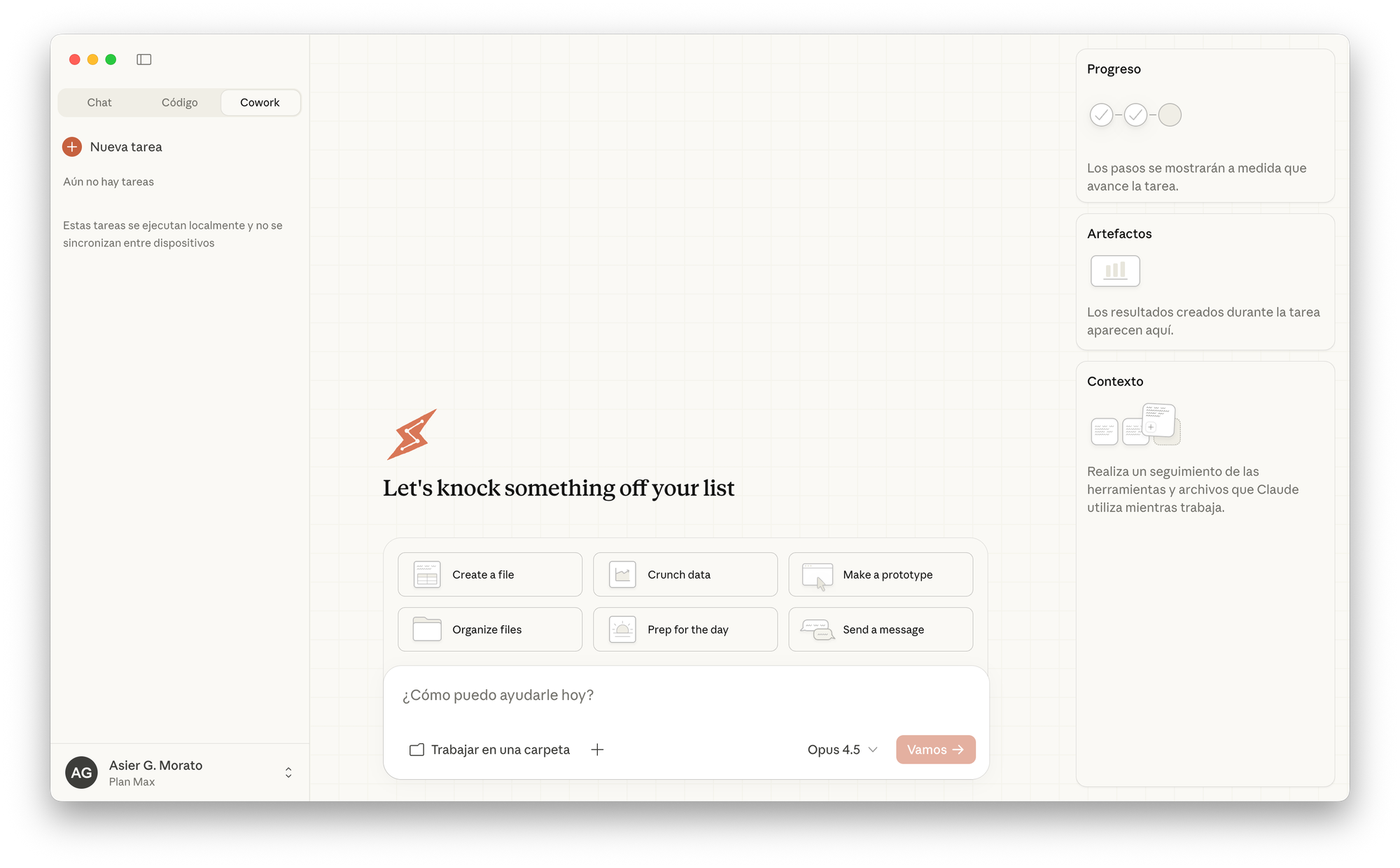
If chat were enough, why do all AI apps end up adding buttons, suggestions, and visual elements? Because they've discovered the same thing I have, sitting here in front of the blinking cursor: people don't always know what to ask for. And when you don't know what to ask for, you need to see options.
Options like the ones you see in the Claude screenshot, though I could also show you examples from ChatGPT or even Siri.
There's nothing wrong with that. It's just that we can't expect users to have the creativity or even the desire to imagine all the possibilities hidden behind that all-powerful agent. If it's so smart, why doesn't it anticipate what I need?
Four Ways to Serve a Coffee
When I was little, I loved going to the family café my parents ran. Back then, all I cared about was sneaking behind the bar to grab a bag of chips. But without knowing it, I was learning things more important than what they teach in school: how to run a small business, how to understand the value you bring to each person, and, perhaps surprisingly, how interfaces should work.
Watching my father behind the bar, I realized he was one of those waiters who don't exist anymore. The kind who can read your mind. Who don't need pen and paper. Who remember who you are and what you like. Anticipating your needs. Appearing and disappearing as needed. The kind who, above all, don't treat you the same on day one as they do after a year of seeing you.
When you meet someone like that, you realize there are four ways to serve a coffee:
- I know what I want. You walk in and order a café con leche. Straight to the point.
- I don't know what to order. Maybe you're undecided or want to discover something new, but if you don't stop to look at the menu, things get complicated.
- I don't even have to order. The moment you walk in, the waiter recognizes you and is already heading to the coffee machine before you sit down. It's not just that they know you'll order a Flat White, they know you want it with oat milk and no sugar. All with a single glance.
- They give me more than I asked for. On weekends, groups of friends would come to the café. My father would recommend games, challenge them, help them discover new things. It's no longer just a good coffee, it's a relationship.
Until now, technology has limited us to creating interfaces that treat you with the same warmth as a McDonald's self-service screen. That's why it would be shortsighted to limit ourselves to turning our apps into chatbots.
The ambition should be to do the opposite of what banking did. To go from a button interface (like an ATM or the banking app) to that complicity our parents had with their bank manager. The one who knew when you should wait before making an investment. Who called you when they noticed something strange in your account. Who knew your kids by name and asked how they were doing. The one who advised you as if you were family, not just an account number.
The Proactive Interface
The future is not a chatbot stuck in a corner. It's a proactive interface that knows you.
One that changes throughout the day. That shows you the essentials in the morning and summarizes how things went at night. That suggests things without you asking, but is always ready in case you need something.
One you can talk to, type to, or tap on. Where it doesn't matter if you're looking at your phone, wearing a smartwatch, or using smart glasses. Cross-platform. Multimodal. The same service adapted to different contexts.
And just as no two people have the same Instagram feed, no two people should have the same home screen in your app. The interface has to adapt to who you are, what you do, what you need. And we'll have to design its personality too. So that over time, you can build a relationship. Something that makes you come back not out of obligation, but because it gives you something you can't find anywhere else.
Maybe in the near future, when I sit down in front of my iPad again to share one of my ramblings, I won't feel the cursor's accusatory blinks anymore.
Writer's block will have disappeared because Ulysses will be smart enough to detect when I'm stuck. It will help me get the first words out. It will challenge what I'm writing. It will ask me about some anecdote, like the one about my parents.
It will be my editor. But not one that just corrects typos. One that guides me as a writer.
Member discussion