

The Comfortable Lie of Taste
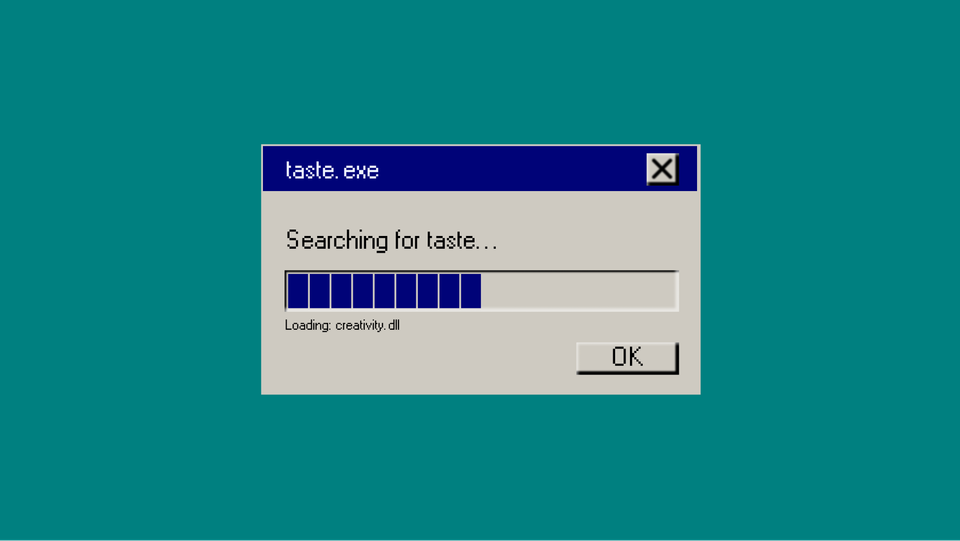
There's a phrase echoing through every tech conference, every LinkedIn post, every podcast about the future of work: "Taste and personality will save us from AI". And I keep wondering if that's insight or a life raft we're all grabbing onto.
The factory floor never really left
In 1936, Charlie Chaplin made Modern Times. You know the scene: a worker tightening bolts on an endless assembly line, reduced to a single repetitive motion until the machine swallows him whole. It was a satire about industrialization. It was also, accidentally, a preview of what we'd do to knowledge work a century later.
Think about the designer at a big company. In theory, a creative job. In practice? Assembling pre-made components from a design system, following brand guidelines so rigid they could be a recipe, passing the result to the next person in the pipeline. Two pieces together, hand it off, repeat.
Think about the customer support agent reading from a script so strict that any deviation is a performance issue. Or the admin entering invoices into a system all day, every day, following a flowchart where "use your judgment" is nowhere to be found.
We took jobs that once required thinking and turned them into assembly lines. We called it optimization. We called it process. We called it scaling.
Chaplin's factory worker tightened bolts. Ours fill in templates.
The part nobody wants to say out loud
Now AI shows up and can do those jobs. And the collective response is: "Don't worry, what makes us special is our taste, our judgment, our humanity".
OK. But here's the uncomfortable question: how many of those jobs were actually designed to suppress exactly that?
How many people in creative roles were explicitly told not to be creative? How many support agents were punished for going off script, even when the script was wrong? How many professionals spent years learning that having an opinion was a liability?
AI isn't replacing humans. It's replacing the version of work where we already weren't allowed to be human.
That's not entirely a tragedy. But calling it progress without acknowledging what happened feels dishonest.
So what now?
I don't have a clean answer. I'm suspicious of anyone who does.
But I think the interesting question isn't "will taste save us?" It's whether we'll actually design work that lets people use it.
Because if we rebuild the same assembly lines with new tools, if AI-augmented work just means a fancier template and a stricter flowchart, then we haven't learned anything. We'll have just replaced Chaplin's gears with a chat window.
And a few years from now, someone will write another think piece about how the next thing that makes us irreplaceable is... something else we've been systematically trained not to use.
The taste was always there. We just spent decades telling people it wasn't part of their job.
Member discussion