

Software for an audience of one

I was diagnosed with type 1 diabetes at 14, two days before Christmas.
Since then, every meal has been a small math problem. How much am I going to eat? Where is my glucose right now? How much insulin from the last shot is still working? Solve it, inject, repeat four or five times a day.
For years I used Diabetes:M for exactly one thing: its bolus calculator. A whole app, with its charts, its logs and its menus, to do one sum. Like carrying a Swiss Army knife and only ever using the bottle opener.
A few weeks ago I replaced it with an app I built myself. It's called MedCalc, it lives on my iPhone and my Apple Watch, and it will never be on the App Store.
That's the best part.
Cori, the first time
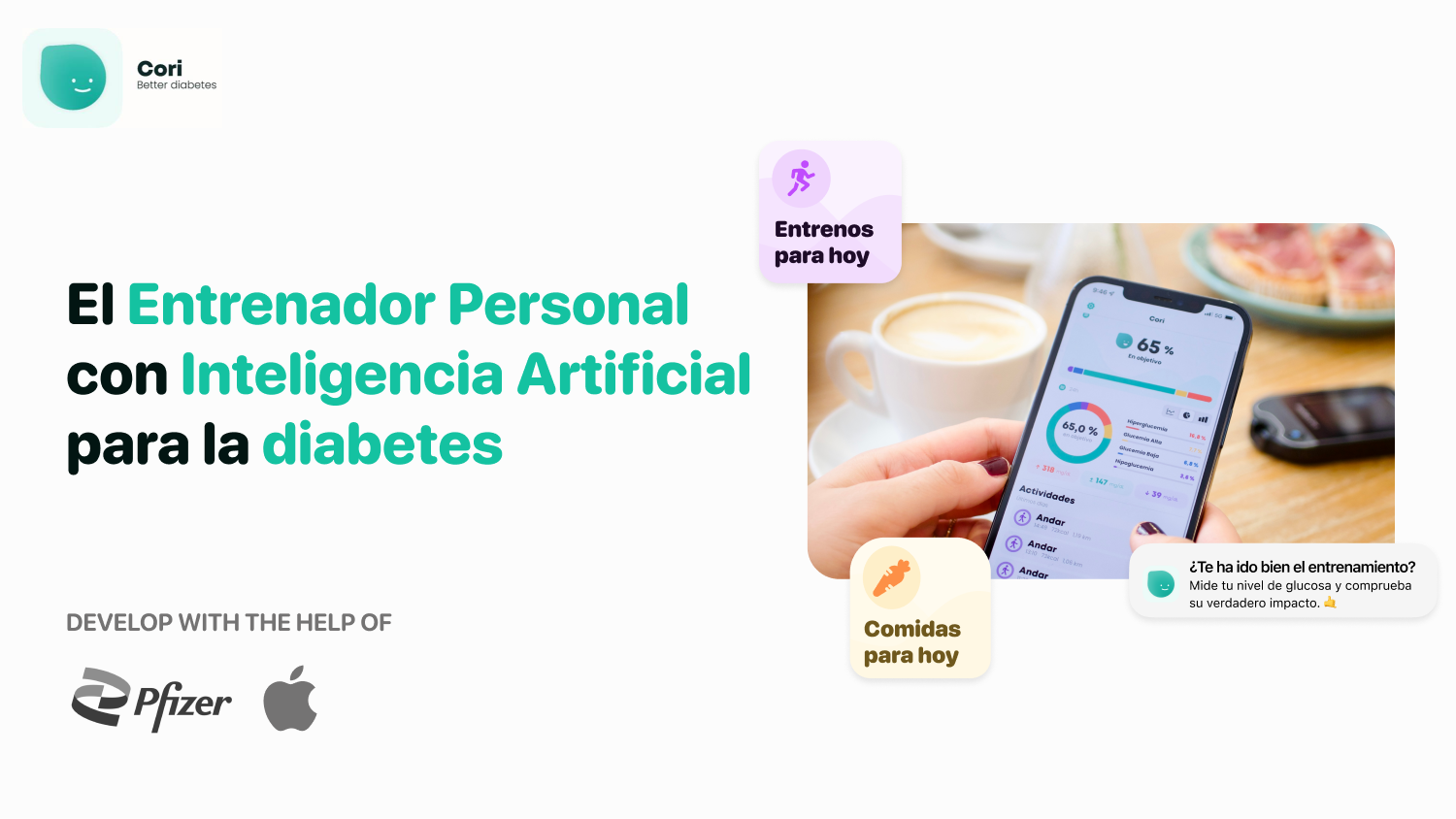
This isn't my first attempt at building software for my diabetes. In fact, it's the reason Chubby Studio exists.
In 2020, during lockdown, Patricia and I decided to spend a couple of months learning to program. I was a journalist. She was an interior architect. My only previous coding experience was building Shortcuts. After a detour making an app that tracked how long you'd been wearing your face mask (it was 2020, after all), we built Cori: a diabetes app that didn't look like it had been designed for a hospital.
It went further than we ever imagined. It was available in 175 countries and Apple featured it. We joined Pfizer's accelerator, which ended up taking us to Boston, and in 2022 we were selected for Apple's Entrepreneur Camp. The promise was always the same: an assistant that understood the whole person (glucose, food, exercise, insulin) and anticipated what was coming instead of just showing you what had already happened.
The features that would have made Cori truly special never shipped.
Not because of the technology. Because of regulation. Software that tells you how much insulin to inject, or predicts where your glucose is heading, is a medical device. In Europe that means MDR and CE marking. On the App Store, guideline 1.4.2 says dose calculators need regulatory approval.
We wanted to do it. We really did. But certifying a medical device costs an arm and a leg, and Cori never reached the kind of business numbers that would justify that investment. So we made a decision that, looking back, shaped everything that came after: we moved to fitness with FitWoody, precisely to stop building software that needed regulatory approval.
And I want to be clear here: that regulation is necessary. Someone's insulin dose is not the place to move fast and break things. If a startup gets the math wrong, someone ends up in the ER. The rule exists so that the 2020 version of me can't ship a dose calculator to thousands of strangers.
But the rule says nothing about building one for yourself.
Two days
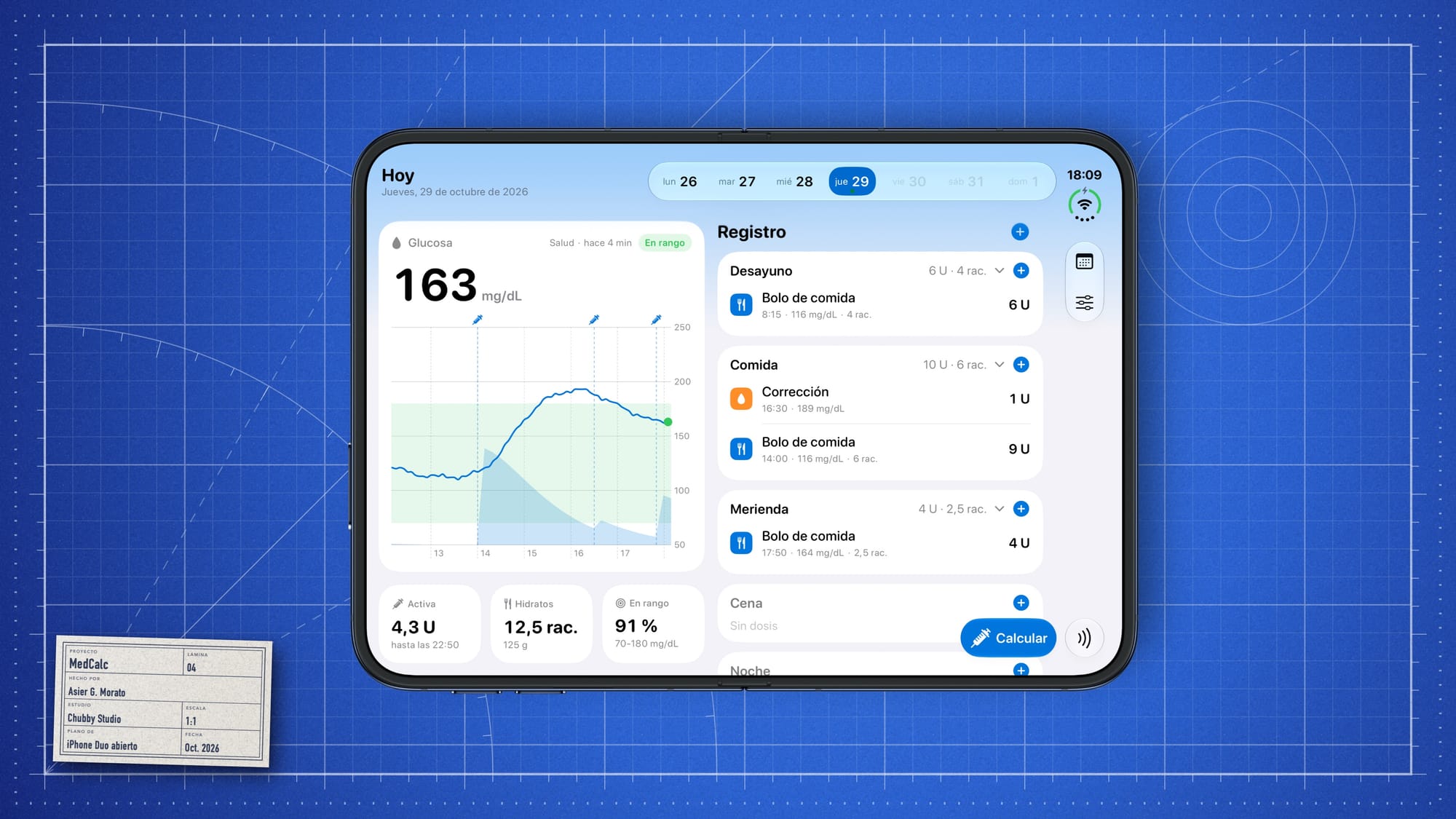
In October I opened a project with Claude and, instead of a prompt, I handed it a playbook.
Everything we've learned at Chubby Studio building apps like FitWoody, the same app we built to escape regulation. Our conventions, our rules for SwiftUI views and concurrency, how we test, how we name branches, how we design. On top of that, the research: the calculator's formula, how fast-acting insulin behaves over time, the safety limits.
A couple of days later I had an MVP of an app that is, honestly, complex. Native on iPhone and Apple Watch. Apple Health as the only health database. A pure, deterministic bolus engine with hundreds of tests. My glucose readings and my insulin pens feeding into it. On the second day alone, the repo got 100 commits.
I'm not going to pretend it was magic. There was plenty to manage: a coordinator splitting the work into threads, rules written the day after something went wrong, me approving designs and rejecting icons. Actual work.
But what fascinated me wasn't the speed. It was where the speed came from.
The speed didn't come from the AI. It came from the playbook. Claude didn't know what an exceptional iOS app looks like at Chubby Studio. We told it, in writing: years of decisions compressed into a handful of Markdown files. What the AI did was multiply that know-how. The better your playbook, the bigger the multiplier.
Zero times anything is still zero.
The user is me
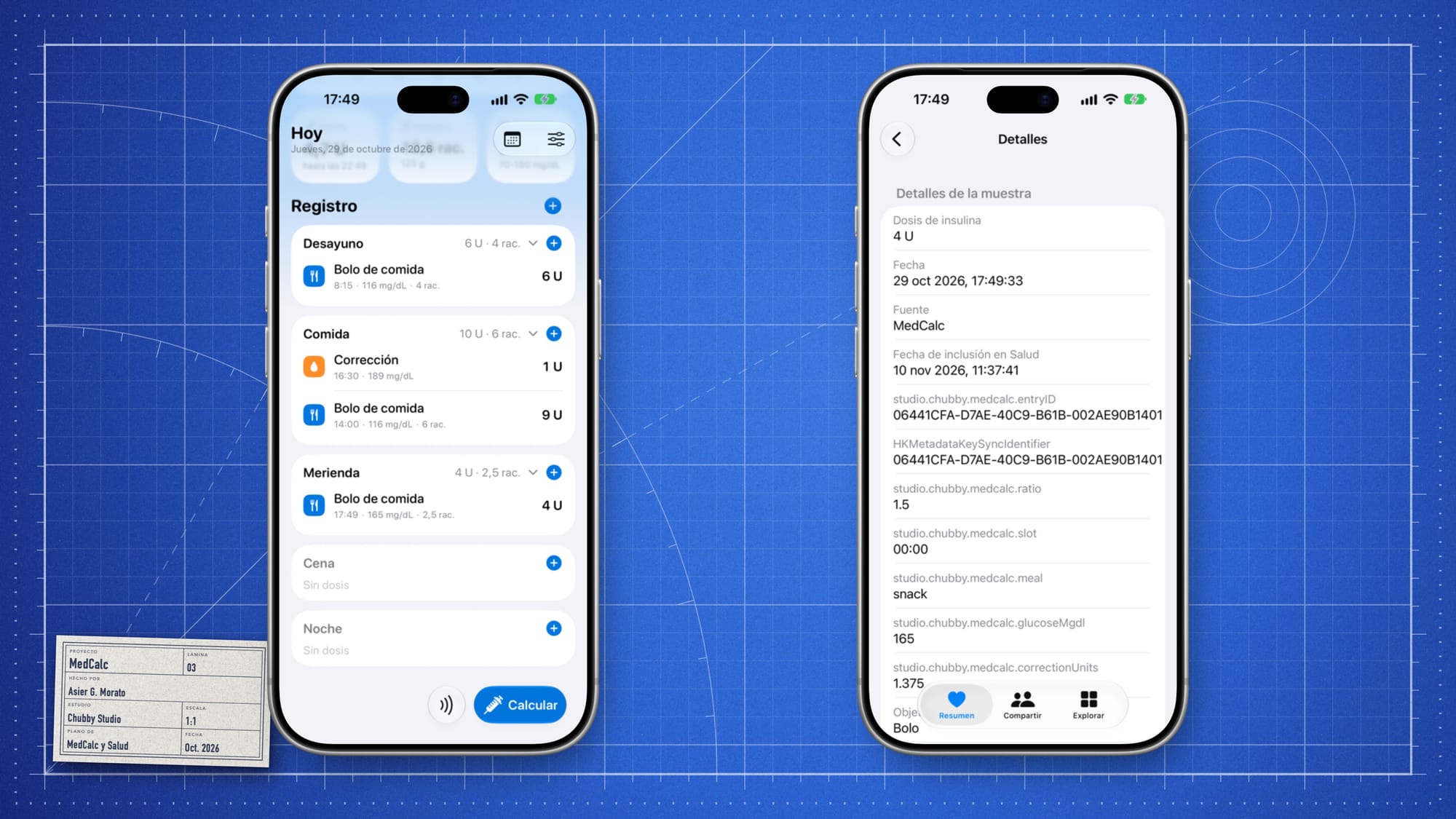
When the only user is you, product decisions get wonderfully easy.
No widgets, because I don't want them. No Face ID to open the therapy settings, because honestly, it's a pain. My insulin is the default, because it's the only one I use. My data lives in Apple Health, not in a database I have to babysit. No onboarding, no paywall, no growth roadmap.
Here's the interesting bit: the safety limits didn't get looser. They got stricter. No calculation below 70 mg/dL. After a low, the app keeps using that low reading for 30 minutes. A maximum dose. No stale glucose values sneaking into the math. When you're the one holding the pen, you don't cut corners.
And the features Cori never got to ship? They're there. The calculator takes into account the insulin still on board, the meal and the exercise. There's a low glucose forecast. All of it for one user.
I spent a couple of days double-checking every calculation against Diabetes:M. Then I stopped. It works better for me, because it was built for me.
(The obligatory note, and I mean it: this is not medical advice, and nobody should use an app tuned to my therapy. That includes the version of you thinking "I could do that too". Talk to your endocrinologist first.)
Not everyone will build their own apps
It's tempting to jump to the conclusion that everyone will build their own software now. I don't think so.
When YouTube, Instagram and Twitter democratized content, most people didn't become creators. They kept consuming. What changed was that niches suddenly had someone making things for them, and the content everyone consumed got better.
I think software is heading the same way. My neighbor isn't going to build his own banking app. But the physio clinic, the bike shop or the family winery that could never afford custom software now can. And the apps everyone downloads will keep getting better, because the people building them have a multiplier too.
Software for an audience of one won't replace the App Store. It will fill the gaps the App Store can't reach, by design.
Cori, again
For a few days, while I was building it, the app was called Cori. It felt right. Then I renamed it MedCalc, because that's what it is, and because Cori belongs to another story.
Six years after Patricia and I started learning to code, the app I always wanted to ship finally exists.
It has exactly one user. He seems pretty happy with it.
Member discussion